
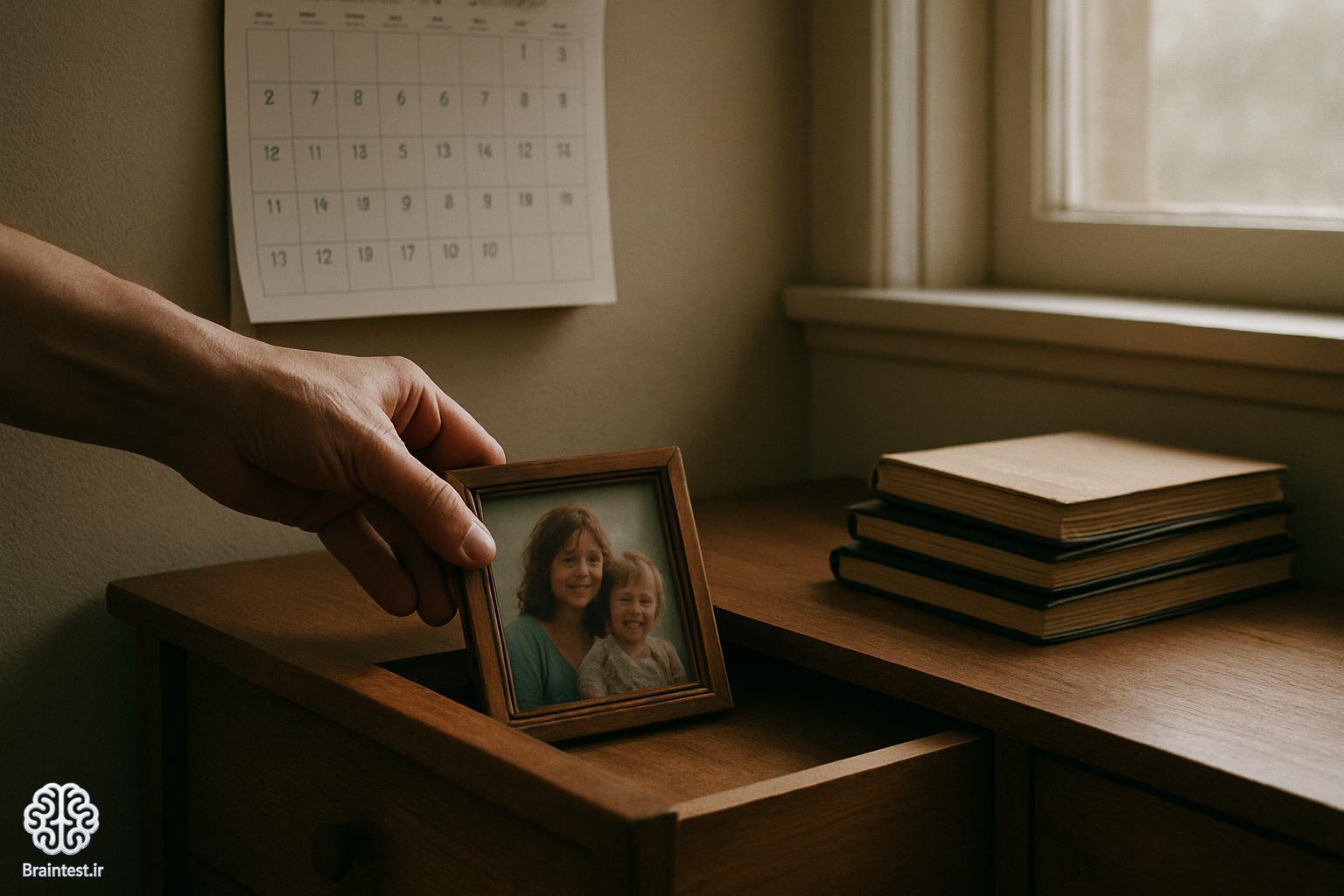
Personality is a set of relatively stable patterns in thoughts, feelings, and behaviors; however, this stability is neither identical nor absolute. Many traits remain the same over time, but others change with shifting life conditions, new experiences, and the course of psychological maturation. The link between “personality” and “time” lies in this reality that traits are simultaneously shaped by inner predispositions and by the consequences of the environment, and the share of each can shift throughout a person’s life.
Where do enduring traits come from?
The stability of traits usually draws from several sources:
1) Biological basis and temperament
Part of individual differences stems from biological and innate factors, such as overall levels of arousal, neuro-emotional sensitivity, or trends in emotion regulation. This component provides a relatively fixed framework for psychological reactions, making certain characteristics—such as a tendency toward worry or a tendency to seek experience—less likely to undergo fundamental change over time.
2) Learning patterns and behavioral habits
When a pattern is repeated many times in similar situations, it becomes a habit. Habits require less psychological energy and make the decision-making system more automatic. For this reason, even as time passes, many behaviors remain predictable.
3) Shaping the environment through the individual
People, to some extent, choose and recreate their environment. Choosing friends, the style of one’s job, the type of relationships, or even how one manages conflict can create opportunities similar to those of the past. In this way, a stable trait is reproduced under the guise of “aligning with the environment.”
Why do some traits change?
Trait change usually occurs when the balance between stable factors and variable factors is disrupted. Several important mechanisms can be observed:
1) Biological changes and developmental stages
Puberty, entering adulthood, hormonal changes, and even the process of aging can affect how people experience emotions, tolerate pressure, and process information. As a result, some traits that are strongly tied to biological mechanisms have greater potential to change.
2) Major life events and psychological impulses
Life events—from changing career paths and migrating to loss, illness, or major successes—can alter perspectives and patterns of meaning-making. When cognitive and emotional structures change, a trait that previously seemed fixed may be adjusted or redefined.
3) Changes in emotion-regulation skills
Sometimes the reason for change in “the ability to manage feelings” is not in the core temperament itself. Over time, a person may learn to identify emotions more effectively, reduce rumination, or use more adaptive strategies in conflicts. This process can lead to reduced behavioral fluctuations or changes in the observable intensity of a trait.
4) Corrective experiences and exposure to new information
Throughout life, people encounter information and experiences that complete or correct their prior image of themselves and the world. If such information is internalized, it can lead to gradual changes in decision-making style, beliefs, and behaviors related to the trait.
The concept of “stability” versus “invariance”: two psychological layers
Stability of personality does not mean staying the same under all circumstances. What many studies highlight is that traits usually have temporal predictability, but the amount of change across time can be small or large, and may appear more strongly in certain areas.
In other words, personality is not like a device with fixed settings; it is more like a collection of settings that gradually adjusts as new data enter. Therefore, a person may remain stable in the “overall direction,” while showing changes in “intensity” or “how it is expressed.”
The role of life environments in stabilizing or changing traits
Environment is not merely a backdrop; it is an active engine of shaping. Several categories of environments have the strongest effects:
Structured and predictable environments
Schools, strict organizations, or legal frameworks can standardize behavior and strengthen or moderate certain aspects in individuals. In such spaces, traits like orderliness or responsibility may move from potential to more stable functioning.
Ambiguous and competitive environments
In high-pressure environments, people may build new defensive or regulatory strategies in response to threat or ambiguity. The outcome can be an increase or decrease in some emotional features; for example, sensitivity to criticism or emotional reactivity may change over time.
Supportive environments and safe relationships
Stable, supportive relationships can make it possible to practice more adaptive behaviors. As traumatic or chronic experiences decrease, some cautious or avoidant patterns may be adjusted.
Why doesn’t change always happen?
A significant part of traits resists change. This resistance can stem from several factors:
1) Reproducing successful patterns from the past
If a pattern worked effectively in the past, the likelihood of preserving it is higher. The psychological system tends to keep strategies that have produced results.
2) The cognitive and behavioral cost of change
Changing patterns requires energy, practice, and tolerance for mistakes. When life circumstances do not allow it, the system returns to familiar patterns and change remains superficial.
3) Trait alignment with identity
Some traits become part of a person’s identity over time. When a characteristic finds “personal meaning,” changing it comes with internal resistance and usually progresses gradually and within limits.
A mental timeline: from childhood to adulthood
In general, personality development over the lifespan tends to follow a multi-stage process:
- Childhood and adolescence: the formation of patterns and initial stabilization of emotional and social styles. In this stage, changes are usually more noticeable and more dependent on experience.
- Adulthood: increased weight of chosen environments and strengthening of behavioral patterns through repetition. Therefore, stability increases, even though opportunities for adjustment through life events still exist.
- Midlife and aging: changes are more often accompanied by adaptation, cognitive reappraisal, and setting goals anew. In some aspects, the intensity of emotional reactions becomes more moderated, and focus on meaning and the quality of relationships increases.
This is a general division and not the same for everyone, but it clarifies a time-based perspective: personality does not change only with “age”; it changes through a set of experiences and life roles.
What is the difference between a trait and behavior?
Personality primarily shows itself in “stable tendencies,” not in fixed behaviors. A person may have a trait such as introversion, yet display different social behavior depending on work or social context. Also, a trait may change at the inner level while being less visible in outward behavior, or vice versa.
For this reason, assessing personality change should consider several levels:
- the level of subjective experience (how one thinks and feels)
- the level of decision-making style (how one chooses strategies)
- the level of behavior (what actually happens in practice)
Time can affect each of these levels at different speeds.
Summary
The stability and change of personality result from the interaction of inner forces and external conditions over time. Enduring traits are usually reinforced by biological predispositions, repeated learning, and the individual’s reproduction of the environment. In contrast, trait change occurs more often due to major life events, biological development, learning emotion-regulation skills, and exposure to corrective information. What is decisive here is that it is not absolute stability; rather, it is predictability in the “overall direction,” with the possibility of change in “intensity,” “how it is expressed,” and “behavioral strategies.” Ultimately, personality is not a fixed map, but neither is it baseless and completely fluid; its path over the lifespan depends both on the past and on fresh experiences. This combination clearly explains why some characteristics endure and others transform.