
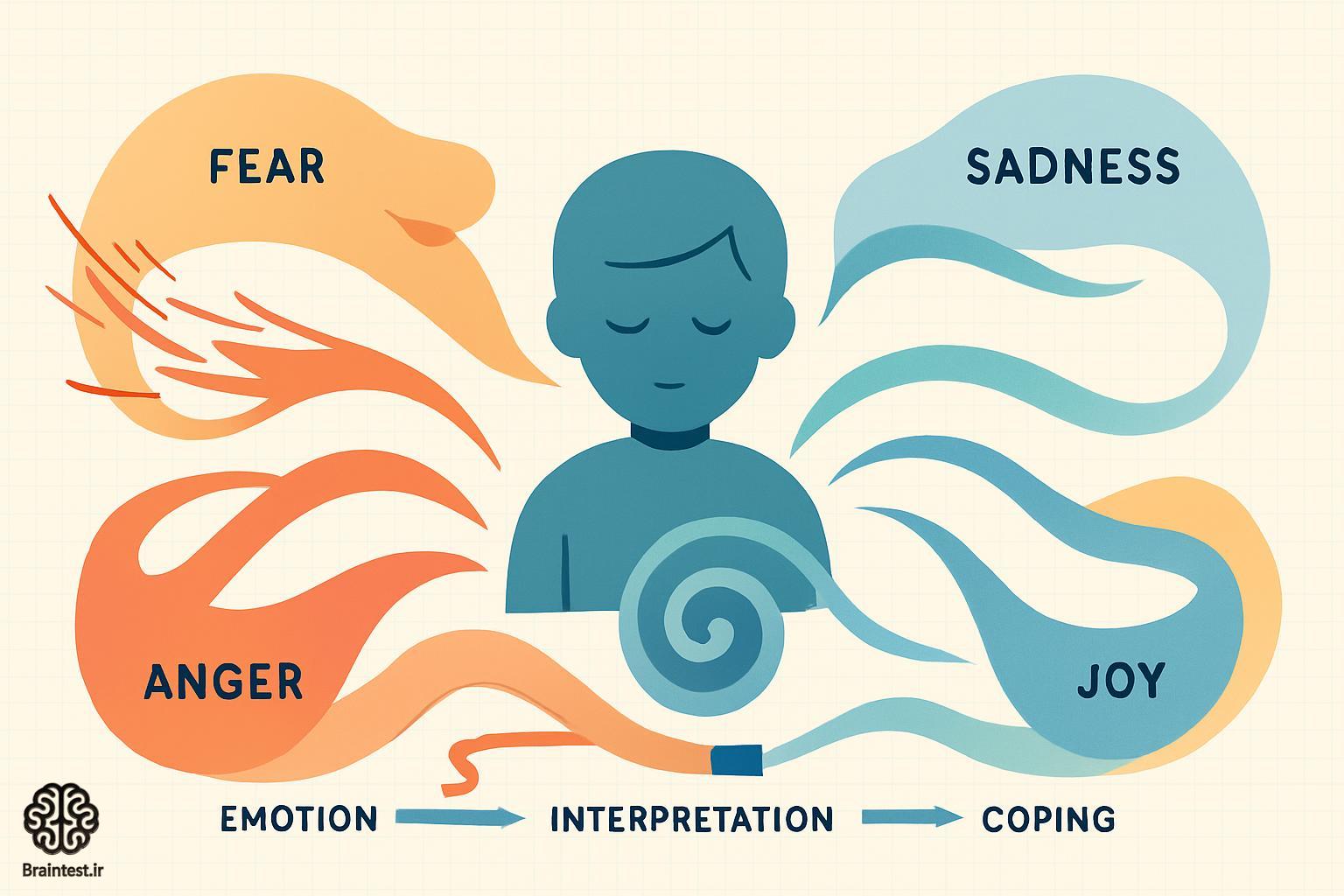
Parenting style from the earliest years of life provides a framework for learning emotions; the child learns, through how parents interact with fear, anger, sadness, and joy, to recognize emotions, regulate them, and respond more effectively to pressures. Emotional growth is not simply a matter of “the child feeling good”; it also includes skills such as identifying feelings, tolerating distress, impulse control, empathy, and the ability to return to a calm state after stress. Along this path, resilience also takes shape—meaning the adaptive ability to continue and repair oneself after difficult experiences.
What is a parenting style, and why is it related to emotional development?
A parenting style is a set of relatively stable attitudes and behaviors by parents that repeat across different situations: how they respond to crying and anger, the predictability of rules, the way they talk about emotions, and how much they respect the child’s independence. Developmental and clinical psychologists usually examine common parenting styles along several dimensions: the level of support and warmth, the level of control or supervision, and the way rules are applied (strict, flexible, or unpredictable).
The connection between this topic and emotional development comes down to a simple principle: children learn their emotions through interaction with the social environment. When parents show consistent and understandable reactions, the child’s mind encodes the meaning of emotions more effectively. When responses are contradictory or overly punitive, the child may learn to hide certain emotions or may experience an emotional breakdown in the face of pressure.
Cognitive psychology: from “emotional experience” to “mental interpretation”
Cognitive psychology explains that emotions are not merely a reflection of external stimuli; they are the result of the individual’s interpretation of the situation. In childhood, parents are essentially the first “interpretation guide.” If a child experiences failure, their interpretation may form:
- “I’m worthless”
- “Mistakes are part of learning”
- “I don’t have to get everything right immediately”
The difference in interpretations depends on the kind of messages parents deliver: Does the child’s mistake come with blame and humiliation, or with guidance and hope to try again? After the child is upset, do parents create an opportunity to name the emotion, or do they silence it with phrases like “Pull yourself together”?
When a child’s interpretation becomes more positive and realistic, the pathway for emotional regulation is also strengthened. Over the long term, such regulation helps build resilience, because instead of getting stuck in the cycle of failure-anxiety, the child can create cognitive distance and activate more adaptive strategies.
Developmental psychology: when a child learns emotional skills
Emotional growth appears differently at various stages. In early years, the child learns more through parents’ behaviors and repeating patterns. In school-age years, verbal communication and logical explanations become more important. As adolescence approaches, the role of peers becomes more prominent; however, the family still preserves the foundation the child has built for emotional regulation.
In this journey, key skills typically include:- Labeling emotions: the ability to describe fear, anger, sadness, or joy with clear words
- Tolerating negative emotions: the ability to keep going even when upset or discouraged
- Impulse control: reducing momentary behaviors and increasing decision-making
- Emotion-based problem solving: finding alternative ways to cope with pressure
- Social collaboration: understanding others’ needs and adjusting one’s reactions
The parenting style determines how quickly and what quality these skills develop.
Social psychology: emotions gain meaning within the network of relationships
Emotions do not develop in a vacuum. The child learns from the family: communication patterns and social standards—respect boundaries, how to ask for help, accepting differences, and how to manage conflict. Social psychology shows that the quality of early relationships can influence the child’s beliefs about safety and competence.
For example, in families where parents’ responses to conflict are predictable and based on dialogue, the child learns that conflict does not mean the destruction of the relationship. As a result, when faced with pressures, the child is less likely to resort to extreme reactions. However, in families where emotions are met with rejection, threats, or indifference, the child may learn to link relationships with danger; as a result, social anxiety increases and resilience is weakened.
Parenting styles and emotional consequences (a general, non-judgmental view)
In the literature of developmental psychology, different parenting styles are usually examined in general terms. These categorizations are not a definitive label for every family, but they help us understand common trends:
Authoritative style (warmth with structure)
In this style, there is both warmth and clear rules. Parents, while paying attention to the child’s feelings, explain limits and talk about the consequences of behaviors. The usual outcome of this pattern is that the child:- sees emotions as real and expressible,- does not experience rules as arbitrary,- and can distinguish between “having emotions” and “acting on every emotion.”
This fundamental distinction is the basis for emotional regulation. When the child is taught that distress can exist but that necessary behaviors don’t have to be harmful, the path to resilience opens up.
Authoritarian style (high control with less warmth)
In the authoritarian style, control and pressure to obey are stronger, and the child is given less opportunity to explain their feelings. Sometimes parents try to reduce anxiety with instructions, but the emotion remains active at both the cognitive and physical levels. Possible consequences in this type of environment may include:- suppressing emotions instead of regulating them,- increasing fear of making mistakes,- and reducing emotion-based problem-solving skills.
In such circumstances, the child may appear “obedient” outside, but inside may experience emotional exhaustion. Resilience may show up in a superficial way—meaning the child may seem to endure, but the capacity to repair and return to calm is limited.
Permissive style (high freedom with unclear structure)
In the permissive style, there may be a great deal of warmth, but rules and follow-through on behaviors may be low or inconsistent. As a result, when facing frustrations, the child may experience a higher level of confusion, because they do not have reliable strategies for controlling emotions. In this case, the child may:- express impulses more quickly,- learn to internalize rules later,- and, in situations of pressure, feel unstable without structural support.
Resilience in such environments may fluctuate, because sufficient predictability is not provided.
Rejecting/indifferent style (low support and low sensitivity)
In the rejecting style, attention to emotional needs becomes minimal, and parents’ responses to the child’s distress may be humiliating, dismissive, or threatening. Such an experience may lead the child to believe that emotions are not worth supporting or that expressing them is dangerous. As a result:- the child may hide feelings,- reduce requests for help,- and use fewer adaptive strategies when facing stress.
In clinical psychology literature, such patterns are associated with an increased risk of emotional regulation problems and difficulty in recovering after a crisis, because the child has learned to “be alone” and has had fewer experiences with effective ways to manage pressure.
From emotional development to resilience: a chain built within the family
Resilience is not just resistance to hardship. Resilience includes several components:
1) Recognizing and labeling emotions (so the person understands what is happening)
2) Emotional regulation (so reactions can be controlled)
3) Cognitive reappraisal (so more adaptive meanings are formed)
4) Maintaining connection and support (so feelings of loneliness decrease)
5) Learning from experience (so future crises become more manageable)
The parenting style affects all five components. By how parents respond to crying, how they explain mistakes, and how they respect emotions, they essentially design the child’s “implicit training” in resilience. For example, when mistakes are addressed with a focus on correction and the child’s feelings are acknowledged, the child learns that failure is not the end of identity. This mental interpretation has an important protective role at the level of cognitive psychology.
Emotional consequences in the long term: a general picture of growth
In the long term, differences in parenting styles can lead to different patterns in one’s emotional life. In supportive environments with clear structure, there is a greater chance that the child will:- have better emotional awareness,- form safer social relationships,- and be less likely to break down when facing new pressures (academic, family, or social).
On the other hand, in high-stress or unstable environments, the likelihood of difficulty in emotional regulation increases, and resilience may appear temporarily and fragily rather than being built. These differences do not mean a “fixed destiny,” but they explain observable psychological trends.
The role of parents’ sensitivity to emotions: why does a “proper response” matter more than intensity?
The intensity of a child’s emotion is often not, by itself, a criterion for judgment. What matters more is the quality of parents’ responses. An effective response usually has a few key features:- Acknowledging the emotion: the child feels seen
- Guidance without suppression: distress is accepted, but harmful behavior is limited
- Help with labeling and understanding the cause: the child learns what is upsetting them
- Attention to consequences and alternatives: the child learns better ways to cope
This pattern helps build emotion-regulation pathways in the child’s mind. When emotions are handled with respect and, at the same time, with a clear framework from the beginning, resilience turns from a slogan into a skill that can be practiced.
Summary
Parenting style plays a decisive role in emotional development and the formation of resilience, because children learn emotions through everyday interaction: from how parents respond to fear and anger to how they explain mistakes and distress. Supportive styles paired with clear structure strengthen emotional labeling, effective regulation, and cognitive rebuilding after stress, resulting in more durable resilience. In contrast, emotional rejection, instability, or controlling behavior without attention to feelings increases the likelihood of difficulty in emotional regulation and recovery after a crisis. Ultimately, clear boundaries, respect for emotions, and teaching adaptive coping strategies form the main foundations of resilience along the child’s and adolescent’s psychological growth path, and become clearly and strongly visible in future behavioral and emotional patterns.